You collect your keys, you get three quotations, and the totals sit S$25,000 apart. Nobody has done anything wrong. One firm quoted for carpentry across the whole flat, one quoted the kitchen and nothing else, and the third assumed you were keeping the HDB-supplied flooring.
That gap is where renovation budgets go wrong. Not in the big decisions, but in what a quotation quietly leaves out.
This guide sets out realistic 2026 cost ranges by flat type, shows where every dollar tends to go, and lists the six costs that almost never appear in the first quote you receive. It also covers the part most cost guides skip: what happens when the renovation you actually want costs more than a bank renovation loan will lend you.
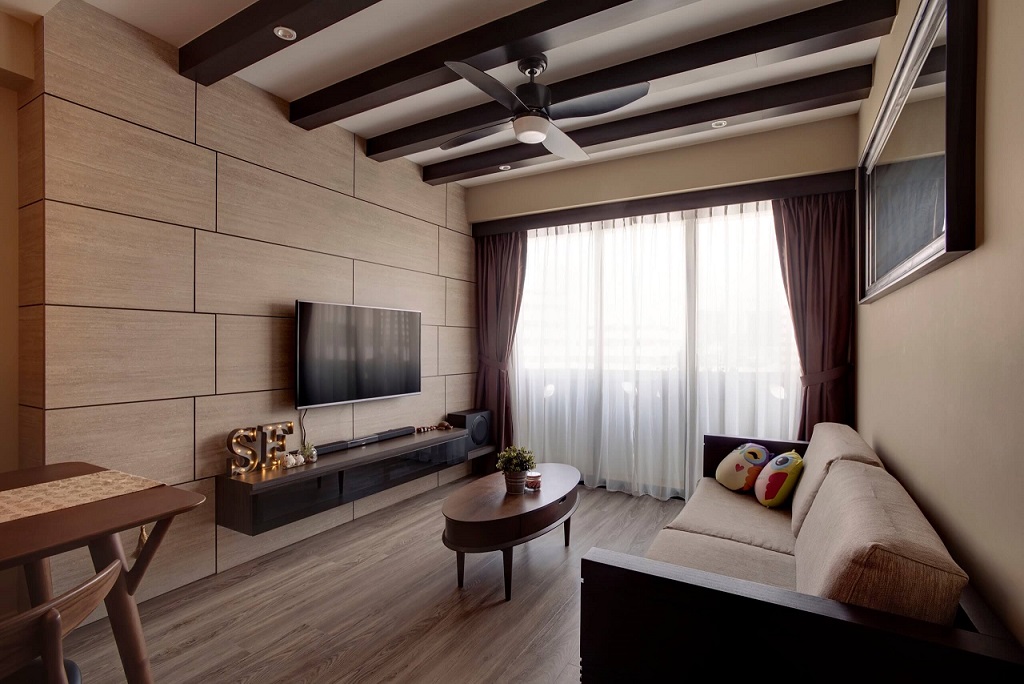
The short answer: what a 2026 renovation costs by flat type
Renovation pricing in Singapore is quoted per flat, not per square foot, and it moves with your carpentry count more than anything else. Based on published 2026 market guides from MoneySmart, Design Authority and Singapore interior firms, the ranges look like this.
| Flat type | BTO (blank slate) | Resale (with hacking and rewiring) |
| 3-room | S$18,000 to S$45,000 | S$25,000 to S$55,000 |
| 4-room | S$22,000 to S$60,000 | S$35,000 to S$80,000 |
| 5-room | S$25,000 to S$75,000 | S$45,000 to S$90,000 |
Two things to read from that table.
First, the spread inside each row is wider than the gap between flat types. A 4-room flat can be finished for S$25,000 or S$60,000, and the deciding factor is usually how much built-in carpentry you commission. Carpentry is the single largest swing item in almost every Singapore renovation.
Second, resale flats generally cost 20 to 40 per cent more than a comparable BTO. A BTO arrives close to bare, so there is nothing to demolish. A resale flat may need hacking, disposal, rewiring, new plumbing and window replacement before a single new tile is laid.
Where the money actually goes
Below is a typical allocation for a 4-room BTO renovated to a mid-range standard. Percentages shift by project, but the ranking rarely does.
| Line item | Typical share of budget | Notes |
| Carpentry (wardrobes, kitchen cabinets, TV console, feature walls) | 35 to 45 per cent | The biggest lever you control. Fewer built-ins means a materially cheaper renovation. |
| Masonry, tiling and flooring | 15 to 20 per cent | Overlaying is cheaper than hacking and relaying. |
| Electrical and lighting | 8 to 12 per cent | Adding power points after the fact costs more than adding them during works. |
| Plumbing and sanitary ware | 6 to 10 per cent | Moving a wet area is expensive. Keeping the layout is not. |
| Painting | 4 to 6 per cent | |
| Design fee and project management | 5 to 10 per cent | Charged by interior design firms, usually not by direct contractors. |
| Haulage, protection, cleaning, permits | 3 to 5 per cent | Small individually, not small together. |
A useful rule when you compare quotations: line up the carpentry sections first. If one quote lists nine carpentry items and another lists five, you are not comparing the same renovation.
Six costs that are not in your quotation
These are the items that turn a S$45,000 renovation into a S$58,000 one.
- Appliances and loose furniture. Fridge, washer, hob, hood, oven, aircon, sofa, dining set, bed frames, mattresses. A full set for a 4-room flat commonly lands between S$8,000 and S$20,000. Renovation quotes almost never include these, and bank renovation loans generally will not fund them either.
- Air-conditioning. Often quoted separately by an aircon specialist rather than the renovation firm. Budget for the system, the trunking and the installation.
- HDB permits and deposits. Certain works require an HDB permit, and your contractor must be HDB-registered to carry them out. Check the current permit list on the HDB website before you sign anything, because approval timing affects your renovation schedule.
- Hacking and disposal (resale only). Demolition is labour, and disposal is tonnage. Both are charged.
- Rewiring and pipe replacement (older resale flats). A flat built in the 1980s may not have the circuit capacity for a modern kitchen. This is a safety item, not a cosmetic one, and it is not optional.
- Contingency. Set aside 10 to 15 per cent on top of your final quotation. Something will be discovered behind a wall, or you will change your mind about the kitchen backsplash. A contingency is the difference between a decision and a crisis.
The gap problem: when your budget exceeds the renovation loan cap
Here is the part that catches most first-time homeowners.
Bank and financial institution renovation loans in Singapore are typically capped at S$30,000 or six times your monthly income, whichever is lower, with tenures usually up to five years. The money is not paid to you. It is disbursed directly to your appointed contractor by cashier’s order, and the funds may only be used for renovation works, not for furniture or appliances.
Read that against the table above. If you are renovating a 4-room resale flat to a mid-range standard at S$55,000, a renovation loan covers roughly half of it. The rest has to come from cash, CPF (which cannot be used for renovation), or another form of credit.
That gap is real, and it is the single most common reason Singapore homeowners end up putting renovation costs on a credit card at 25 to 29 per cent per annum. There are better options than that.
Your realistic choices for the shortfall:
- Cash and savings. Cheapest, and the reason it pays to plan the budget before you commit to a design.
- A personal loan. Not restricted to contractor payments, so it can cover appliances and furniture. Compare the effective interest rate, not the advertised flat rate. Our guide on how to calculate interest rates on different loans in Singapore explains why the two numbers differ so much.
- A loan from a licensed moneylender. Faster to approve and available to borrowers whose income or credit profile does not clear a bank’s threshold. Interest is capped by law at 4 per cent per month, and total charges cannot exceed the principal. Read what to know before borrowing from Singapore licensed money lenders before you apply anywhere.
- A credit card. The most expensive of the four. Use it only if you can clear the balance in full before interest applies.
For a fuller comparison of renovation financing routes, see our ultimate guide to loans for renovations and how a home renovation loan can help you renovate without the stress.
How to build a renovation budget that survives contact with reality
Work backwards from what you can repay, not forwards from what you want.
- Set your monthly repayment ceiling first. Add your renovation repayment to your existing mortgage, car and card commitments. If total monthly debt repayments push past roughly 40 per cent of your take-home pay, the budget is too big regardless of how good the design looks. Our post on loan affordability and budget planning walks through the calculation.
- Convert that ceiling into a borrowing figure. A shorter tenure costs less in total interest but demands a higher monthly payment. The truth about loan tenure explains the trade-off with worked numbers.
- Add your cash contribution. That total is your renovation budget. Not the quotation. Not the mood board.
- Ring-fence 10 to 15 per cent as contingency and do not spend it on an upgrade in week two.
- Phase the non-structural work. Wet works, electrical and carpentry have to happen now. A feature wall, a study nook and the balcony decking can wait twelve months and be paid in cash.
Three ways to cut the bill without cutting the outcome
Reduce built-in carpentry. Swap two built-in wardrobes for one built-in and one freestanding. Carpentry is the largest line item, so it is also the largest saving.
Keep the wet areas where they are. Relocating a kitchen sink or a bathroom means new piping, new waterproofing and a new screed. Keeping the layout can save several thousand dollars for a change most guests will never notice.
Overlay instead of hack. Tiling over existing floors, where structurally sound and permitted, avoids both demolition labour and disposal charges.