Your books look healthy. Your bank balance does not. You have S$180,000 invoiced to three customers on 60-day terms, payroll is due on the 25th, and the supplier who keeps your production line running wants payment on delivery.
That is a cash flow gap, not a profitability problem, and the two are solved by different instruments. Choose the wrong one and you either pay for financing you did not need or you fail to raise enough to cover the gap.
This guide compares invoice financing and working capital loans for Singapore SMEs: what each one actually does, what it costs, who approves it, and a simple test for deciding which one your situation calls for.
The one-line difference
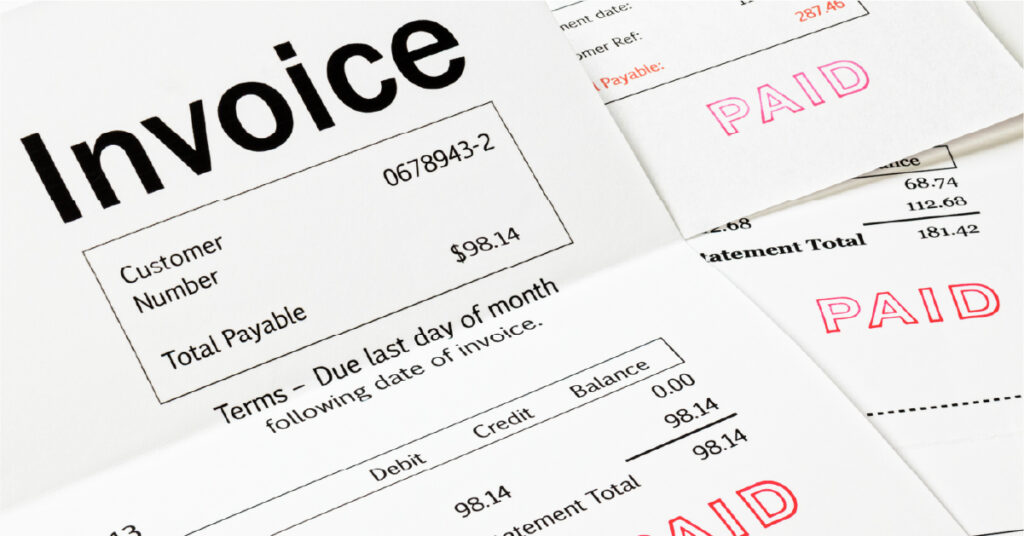
Invoice financing advances you cash against invoices you have already issued. The invoice is the asset. Repayment comes from your customer paying.
A working capital loan lends you a lump sum repaid in fixed instalments over a set term. Your business is the borrower. Repayment comes from your general cash flow.
One is tied to specific receivables. The other is not. Almost every practical difference follows from that.
How invoice financing works in Singapore
You issue an invoice to a customer on credit terms. Instead of waiting 30, 60 or 90 days, you assign or discount that invoice to a financier, who advances a percentage of its face value, commonly in the region of 70 to 90 per cent. When your customer pays, the financier releases the balance to you less its fees.
Three variants you will see quoted:
- Invoice discounting. You retain control of collections. Your customer may not know a financier is involved.
- The financier takes over collections and your customer pays them directly.
- Recourse vs non-recourse. With recourse, you carry the risk if your customer does not pay. Without recourse, the financier does, and it costs more.
Under the Enterprise Financing Scheme, the EFS Trade Loan supports trade needs including inventory and stock financing, and factoring (with recourse), bill of invoice or accounts receivable discounting. The maximum repayment period for the EFS Trade Loan is one year, and EnterpriseSG shares the loan default risk with participating financial institutions at 50 per cent, or 70 per cent for young enterprises or enterprises operating in a challenged market.
What determines your approval and price: the creditworthiness of your customers as well as your own. A small firm invoicing a large, financially strong buyer can often obtain better terms than its own balance sheet would suggest. That is the structural advantage of this product.
How a working capital loan works
You borrow a lump sum and repay it in instalments. The money is not tied to any particular invoice or transaction, so it can cover payroll, rent, inventory, a deposit, a hire, or a gap of no particular description.
The government-supported route is the Enterprise Financing Scheme SME Working Capital Loan (EFS-WCL):
- Maximum loan quantum: S$500,000 per borrower, with an overall borrower group limit of S$5 million under the scheme.
- Maximum repayment period: 5 years.
- Risk share: 50 per cent, and 70 per cent for young enterprises.
- Eligibility: business entity registered and operating in Singapore, at least 30 per cent local equity held directly or indirectly by Singaporeans and/or Singapore PRs, group annual sales turnover not exceeding S$500 million, and for this product an SME is defined as having group revenue of up to S$100 million or a maximum employment size of 200 employees.
Two points that catch first-time applicants.
The risk share is between EnterpriseSG and the lender, not between EnterpriseSG and you. The borrower remains fully responsible for repaying all amounts owing to the participating financial institution. The scheme improves the odds of approval and can improve terms. It does not reduce your obligation.
And the interest rate is set by the participating financial institution based on its own risk assessment. EFS support does not fix the rate.
Side by side
| Invoice financing | Working capital loan | |
| What you borrow against | Specific issued invoices | Your business’s overall creditworthiness |
| Typical amount | Roughly 70 to 90 per cent of invoice value | Fixed sum, up to S$500,000 per borrower under EFS-WCL |
| Typical term | Tied to the invoice payment cycle, commonly 30 to 120 days. EFS Trade Loan is up to 1 year | Up to 5 years under EFS-WCL |
| Repayment source | Your customer’s payment | Your general cash flow |
| Scales with | Your sales volume | Your approved credit limit |
| Key approval factor | Customer credit quality and invoice validity | Your track record, financials and directors’ profiles |
| Best for | Recurring receivable gaps from B2B credit terms | Defined funding needs with no matching receivable |
| Main risk | Customer pays late or not at all, and with recourse you carry it | Fixed repayments continue regardless of revenue |
The decision test
Answer these four questions in order.
- Does an invoice already exist for this gap?
If yes, invoice financing is on the table. If no, it is not, and you need a loan or a line of credit.
- Is the gap recurring or one-off?
Recurring gaps caused by customer payment terms are structural. Financing them repeatedly with term loans stacks debt. Invoice financing scales with the receivables that cause the problem, which is the cleaner match.
- Are your customers stronger credits than your own business?
If you are a young company invoicing established buyers, invoice financing prices off their risk as well as yours. This is often the single biggest advantage available to a growing SME.
- Do you need more than the receivable covers?
An advance of 80 per cent on S$180,000 of invoices gives you roughly S$144,000. If you need S$300,000 for a fit-out, the receivable does not solve it and a term loan does.
What both options will not fix
Neither product fixes a business that is unprofitable rather than illiquid. If revenue is not covering costs, financing buys time and adds interest. Be honest about which problem you have before you take on either.
Neither product removes the underlying cause of receivable delay. If your average collection period has stretched from 45 days to 75, that is a commercial terms issue and a collections process issue. Financing the symptom is reasonable in the short term and expensive as a permanent arrangement.
And neither replaces a cash buffer. A business that runs at zero headroom is one delayed payment away from a problem no product solves at short notice.
If you cannot get bank or EFS financing yet
Government-supported schemes and bank facilities have real eligibility walls: local shareholding, operating history, financial statements, director profiles. New companies and companies without an audited track record often do not clear them, which is exactly when the cash flow gap tends to bite hardest.
If that is your position, the practical routes are:
- Directors’ personal financing. A personal loan or a loan from a licensed moneylender injected into the business. This is common among Singapore founders in year one and two, and it comes with a real caveat: the debt is personal, so if the business fails the obligation stays with you.
- Supplier and customer terms. Negotiating 30 days from a supplier, or a 30 per cent deposit from a customer, is free financing. It is also the most under-used option on this list.
- A staged approach. Fund the immediate obligation, fix the collection cycle, then apply for a facility once you have two years of statements.
If you are considering the first route, read our guide on start-up business loans in Singapore, and check the borrowing caps and cost caps that apply to every licensed moneylender in what to know before borrowing from Singapore licensed money lenders. Our post on the difference between a secured loan and an unsecured loan is also worth reading before you pledge anything as collateral.
FAQ
What is invoice financing in simple terms?
It is borrowing against invoices you have already issued but not yet been paid for. The financier advances most of the invoice value now, and you settle when your customer pays.
How much of an invoice can I finance?
Advance rates commonly sit between 70 and 90 per cent of face value, with the balance released on customer payment, less fees. Rates vary by financier, customer credit quality and whether the facility is with or without recourse.
Is invoice financing cheaper than a working capital loan?
Not automatically. Invoice financing is priced over a shorter period, so the absolute cost per transaction can be lower while the annualised cost is higher. Compare total cost for the period you actually need the money.
What is the maximum EFS SME Working Capital Loan?
S$500,000 per borrower, with an overall borrower group limit of S$5 million under the scheme, and a maximum repayment period of five years. Confirm current terms with EnterpriseSG, as enhancements take effect from 1 April 2026.
Does government risk-sharing mean I do not have to repay if the business fails?
No. The risk share is between EnterpriseSG and the participating financial institution. Borrowers remain fully responsible for repaying all amounts owing.
Can a new company with no track record get either product?
Both are harder without financial statements and an operating history. Invoice financing can sometimes be obtained earlier if your customers are strong credits, because the receivable carries part of the risk assessment.